

User Interface Re-Design : The BlackBerry PlayBook
Of all the innumerable little acronyms that pepper tech talk, UX – user experience – is the one most widely thrown around today. Long gone are the days when software and hardware engineers in the computing sphere produced their wares primarily for the consumption of fellow geeks behind the back of a bewildered and suspicious general public. There’s a powerful computer in everyone’s pocket now, and we expect it to do what we tell it to do. That’s where UX comes in.
Inconveniently, it’s one of the hardest thingsto distil into a perfect science. Psychology, ergonomics and other disciplines have a lot to say on the subject, of course, but the picture they all paint is one we recognise anyway. We, as individuals, have only the vaguest idea of why we respond the way we do to things. So it is with UX – we don’t know why a well-designed interface works; only that it does. More significantly, we know when it doesn’t work.
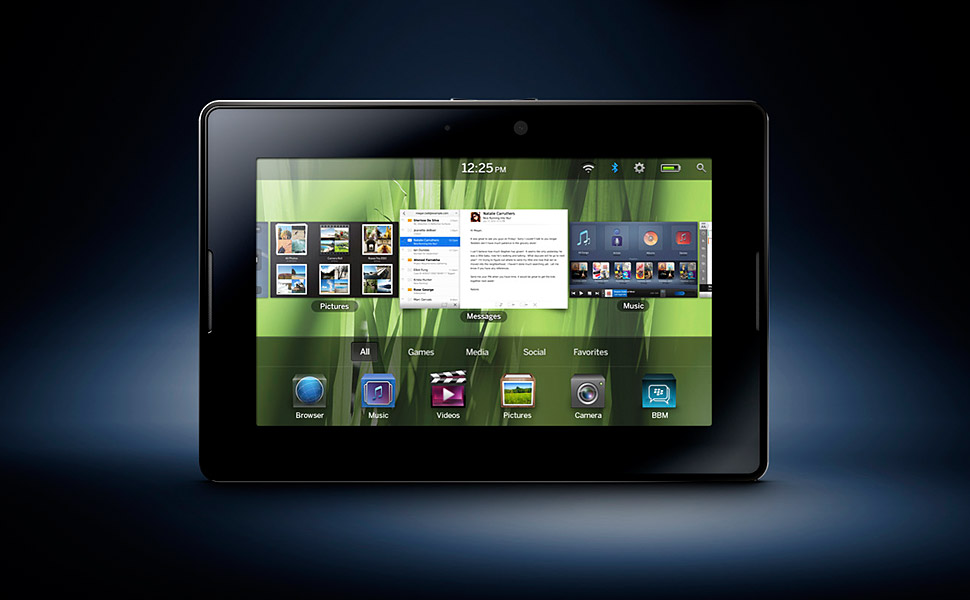
The unstoppable rise of touch-screen devices presents new challenges and opportunities for UX. Using a touch-screen is undoubtedly more directly intuitive than the old mouse/keyboard combo: all the magic that happens between input and output is now quite literally transparent. But difficulties have nonetheless arisen. Substituting a finger for a mouse is easy enough, but the speed and responsiveness of a keyboard – for typing and for shortcuts alike – is harder to replace.
This is why user interface design on newer touch-screen devices has increasingly focused on a more sophisticated means of interaction –greater varieties and combinations of multi-touch gestures and swipes. The BlackBerry PlayBook is a good example: a relative latecomer to the tablet market, RIM aimed to retrieve the responsiveness of the old desktop peripherals for simple functions like task switching. BlackBerry PlayBook reviews have on the whole commended the introduction of new approaches to gestures – for instance, swiping out from the center to the bezel allows for interaction with an app in focus, while swiping from the outside in switches between tasks.
Changes of this kind can, of course, be initially disorienting to the end user. It’s a situation nobody wants in a competitive market place where customers often play with a device for a couple of minutes in the store before (whether they know it or not) making up their minds. The rewards of such modifications, however, are long-term. We all knowstories from the initial PC boom, of mystified individuals mistaking the mouse for a foot pedal and so on. Yet, in Western countries, at least, knowing better than this is simply a necessity for getting on in life, in whatever your field.
As mobile devices get more sophisticated, so will their users, and their expectations of UX. The Verge ‘s BlackBerry PlayBook review lauded the “basic ideas behind the Play Book OS — it’s a lot like web OS and that’s a very good thing from a usability standpoint.” It’s an interesting comparison: web OS is possibly the geekiest platform in the mobile OS market. As time goes on, not only will ease and intuitiveness be expected in UX, but the power of gestures will undoubtedly come to be respected too.
Canadian Carriers delivers the 32GB 4G LTE Blackberry Playbook available at $550
The 7-inch PlayBook is a pretty little package and the operating system is finally a contender.it was announced by RIM earlier this month and it’s finally available from several Canadian carriers. Research In Motion (RIM) is a Canadian designer, manufacturer and marketer of wireless devices and solutions for the worldwide mobile communications market. The company is best known as the developer of the BlackBerry smart phone.
The tablet might have a chance if RIM was in a position to price the PlayBook competitively.The LTE PlayBook is expensive. It’s available through Bell and Rogers for $350 with a three-year contract (lengthy contracts are normal in Canada). The 32GB LTE PlayBook is also available through TELUS without a contract for $550.
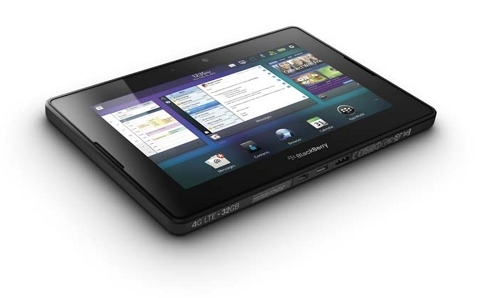
RIM is a tough situation. With its dire financial situation, RIM cannot aggressively price the 4G PlayBook. It likely cannot take a loss on the hardware sales hence the above market pricing. RIM has yet to announce the 4G PlayBook’s US price or release date.
The LTE tablet is slightly upgraded from its WiFi-only counterpart with a 1.5GHz CPU and 32GB storage option, but the main difference is the new LTE radio.
Related Posts :


Similar articles
PingShot is a quick notification service that enables your feed to be updated in the widest variety of places as quickly as you add new content. Keeping your site updated and getting it known to all helps in getting better SERP for your site/blog .
Vertu the Upmarket phones makers has launched a smartphone. which is powered by Android and Vertu Ti will run on Android 4.0 (Ice Cream Sandwich) this smartphone having a 3.7 inch WVGA screen.
Want to put your idea across the Net in a truly new fashioned way? Want to establish name and fame for your product or service to maximize online traffic?
There is a web site where you can find integrated search engines listed by categories: Wiibeez.com
Life without wine; how boring it could be? Just think about this but the problem is that you cannot even think about it as the very thought might make you feeling tired. Everyone needs some sort of refreshment in one way or the other after working like hell in office throughout the day. The shouting
In this article, you’ll find top 12 best alternatives to 10 minute mail for 2026 (best disposable email address).