

Apple executive: Steve Jobs Was receptive to the idea of iPad mini
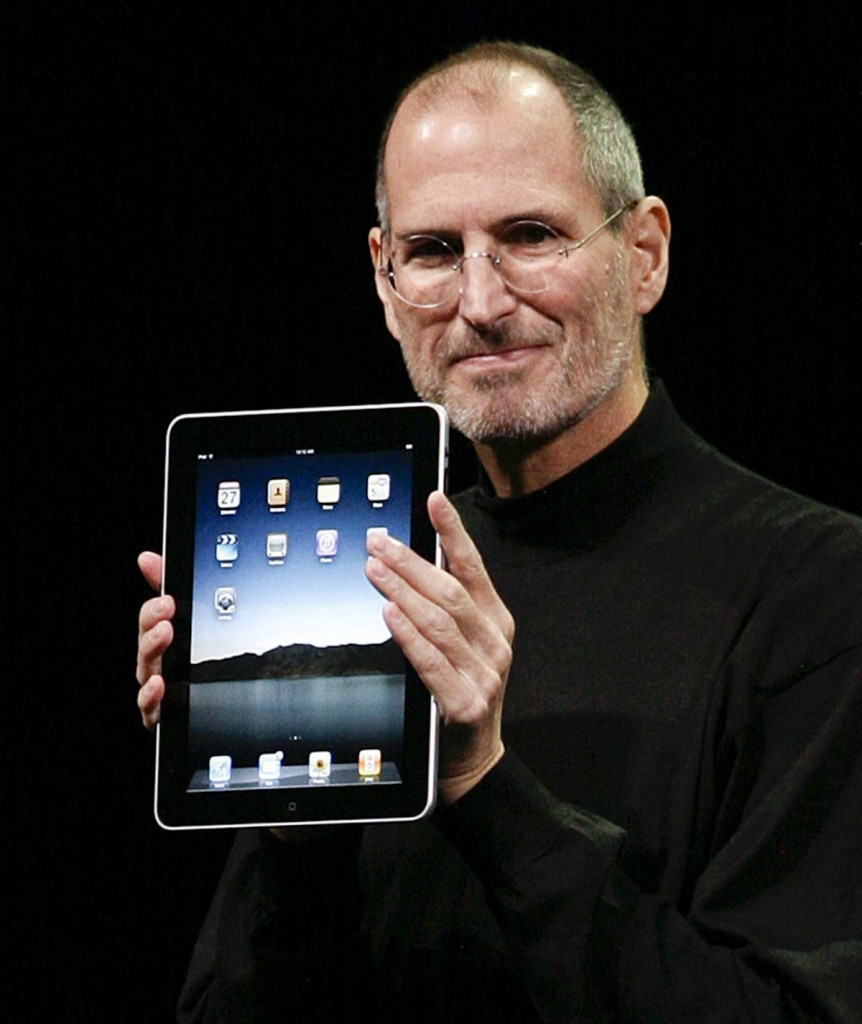
Steve Jobs was receptive to Apple making a smaller tablet, a senior executive said in a 2011 email revealed on Friday, fanning speculation it plans to make a mini-iPad to take on cheaper gadgets from Google Inc and Amazon.
An Apple mini-version of the market-dominating 10-inch iPad could counter increasing inroads made by tablets such as the Kindle Fire and Nexus 7. But the company has never confirmed the intensifying talk of such a launch.
Vice President Eddy Cue urged then-chief operating officer Tim Cook in January 2011 to build a 7-inch tablet, according to an email from Cue that Samsung Electronics presented as evidence in a U.S. patent trial.
In an email addressed also to software chief Scott Forstall and marketing head Phil Schiller, Cue said he believed there was a market for a 7-inch tablet and that “we should do one.”
Cue’s brief email was introduced on Friday as part of a high-wattage trial that will play out in a San Jose courtroom this summer and is expected to transfix the technology industry.
“There will be a 7-inch market and we should do one. I expressed this to Steve several times since Thanksgiving and he seemed very receptive the last time,” the executive wrote in the email. “I found email, books, Facebook, and video very compelling on a 7-inch. Web browsing is definitely the weakest point, but still usable.”
Cue had previously forwarded an article entitled “Why I just dumped the iPad (hint: size matters)”. He wrote: “Having used a Samsung Galaxy, I tend to agree with many of the comments below (except actually moving off the iPad).”
Apple and Samsung are going toe-to-toe in a patents dispute mirroring a struggle for industry supremacy between two rivals that control more than half of worldwide smartphone sales.
The U.S. company accuses Samsung of copying the design and some features of its iPad and iPhone, and is asking for billions of dollars in damages and a sales ban. The Korean firm, which is trying to expand in the U.S. market, says Apple infringed some of its key wireless technology patents.
Cue, who rose to prominence overseeing the iTunes and Apps stores, became the company’s senior vice president of Internet software and services in September. His email was introduced by Samsung during a cross-examination of Forstall on Friday.
In the email dated January 24, 2011, Cue said he had broached the idea of a smaller tablet to Jobs several times since Thanksgiving, and the co-founder was receptive “the last time.”
That appeared to run counter to Jobs’ famous dislike of smaller tablets. In 2010, Jobs told analysts on a conference call that 7-inch tablets should come with sandpaper, so users could file their fingers down to a quarter of their size.
“There are clear limits of how close you can physically place elements on a touch screen before users cannot reliably tap, flick, or pinch them,” Jobs, who died in October after a years-long battle with cancer, said at the time.
“This is one of the key reasons we think the 10-inch screen size is the minimum size required to create great tablet Apps.”
Apple still dominates the global tablet market, but rivals are closing in. Google unveiled the Nexus 7 in July to strong reviews. And Amazon’s Kindle Fire tablet, with a price tag about half the iPad’s, has encroached on Apple’s market share. Analysts say smaller, cheaper tablets entice cost-conscious buyers unwilling to spend $500 or more for an iPad.
Court fireworks
The trial began this week and has already granted Silicon Valley an unprecedented peek behind the curtain of Apple’s famously secretive design and marketing machine.
Forstall described the early days of the iPhone’s top-secret inception. The smartphone that went on to revolutionize the mobile industry was developed in a building engineers nicknamed the “purple dorm.” Security was so tight employees sometimes had to swipe their badges four times just to get in, he said.
Earlier on Friday, Schiller told a packed courtroom that Apple’s strategy in maintaining its market momentum is to “make the product the biggest and clearest thing in advertising.”
The 15-year Apple veteran told the jury the company has spent about $647 million on advertising for the iPhone, launched in 2007, and over $457 million for the two-year-old iPad.
Dressed in a dark suit and yellow tie, Schiller - who favors blue jeans and is among a handful of executives reporting directly to CEO Cook - said Samsung’s copying of Apple’s designs has hurt its sales and disrupted its marketing.
“I was pretty shocked at the appearance of the Galaxy S phone and the extent it appeared to copy Apple products,” he told the jury, adding that he was even more shocked when he saw the Galaxy tab. “I thought they’ve done it again, they’re just going to copy our whole product line.”
Justin Denison, Chief Strategy Officer for Samsung Telecommunications America, took the stand after Forstall, stressing that the world’s largest technology company by sales was also no slouch when it came to design and marketing.
Denison told the court Samsung spent $1 billion on U.S. product marketing in 2011 and employs over 1,200 designers.
Before Schiller took the stand, U.S. District Judge Lucy Koh rejected Apple’s request for severe sanctions against Samsung over the conduct of one of the Korean firm’s attorneys, though she said such conduct risked tainting the jury.
A Samsung statement this week contained links to documents Koh ruled could not be admitted at trial. Attorney John Quinn, of Quinn Emanuel Urquhart & Sullivan, acknowledged he authorized the statement but said it was not designed to sway the jury.
Apple had asked Koh to punish Samsung by ruling that Apple’s phone design patents were valid, and had been infringed. Koh rejected that request but said there may be a post-trial investigation.
“I will not let any theatrics or any sideshows distract us from what we are here to do,” Koh said.
The case in U.S. District Court, Northern District of California, is Apple Inc v. Samsung Electronics Co Ltd et al, No. 11-1846.
Via Reuters
Similar articles
After a long wait finally Apple has announced its iPhone 5. lets talk about some specifications of iphone 5. The new iPhone 5 is here with few surprises: a 4-inch 1136 x 640 display in a 16:9 aspect ratio, LTE support and a design that’s thinner and lighter than prior models. Apple was able to improve the battery life however; key for LTE devices.
Apple mobiles has always given its present and budding customers a reason to smile and make use of latest technology in their devices. This time Apple mobiles has brought in a highly stylish device, Apple iPad 3 4G, which is a sensation altogether. It is laden with numerous impressive features
Apple today announced the launch of the iTunes Store in Russia, Turkey, India, South Africa and 52 additional countries featuring an incredible selection of local and international music from all the major labels and thousands of independent labels.
Calling its decision to abandon a green certification system for electronics “a mistake,” Apple on Friday announced it would again submit its products for EPEAT certification.
According to report Apple‘s long-awaited new iPhone will be announced on Sept. 12. Apple’s last iPhone release was the iPhone 4S on Oct. 4. The blog iMore reports that Apple will announce the new iPhone — possibly called the iPhone 5 — plus a new iPod Nano via a special announcement on that data. Th
Finding that the South Korean technology giant had willfully copied Apple's iPhone and iPad in creating and marketing the products,U.S. District Judge Lucy Koh asked for the list after a jury in San Jose last week slammed Samsung with a $1.05 billion verdict.